 1,000s of Happy Homeowners!
 Pool Deck Pavers
 Front Entrance Monument
 Landscape Walls
 Fire Pits
 Pergolas
 Patio Pavers
 Retaining Walls
 Driveway Pavers
 Outdoor Kitchens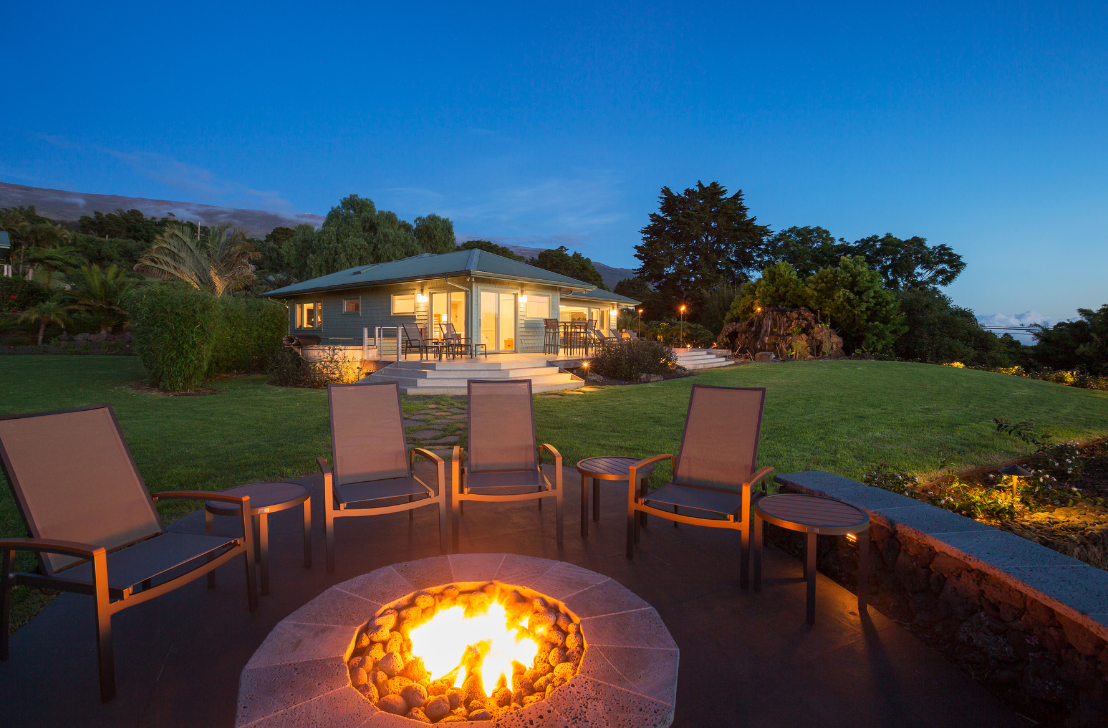
Fire pits invite people to cozy up with hot cocoa and settle in for good memories, but what’s the best way to build them? With pavers! Fire pits built with pavers are extremely durable and easy to customize in virtually any area. There are hundreds of design options to choose from, and several ways to make a fire pit last for a long time. They create luxury and warmth while serving as a beautiful focal point for your outdoor living landscape. Let’s discuss the most important aspects to consider when designing a custom fire pit.
Consider Distance
Are you wondering where to put your fire pit? Good question. It should be in a flat, open area and at minimum 10 feet away from sheds, decks, fences, etc. A minimum of 20 feet away is safest when it comes to dwellings or buildings. You’ll also want to keep fire and smoke away from shrubbery and low-hanging trees. For guests, allow about 5 to 6 feet between the fire pit and seating for maximum comfort but also safety. A fire pit will usually take up about 3 to 4 feet across.
- Small fire pit for two people: 30 to 36 inches in diameter
- Medium fire pit for four people: 36 to 44 inches in diameter
- Large fire pit for six or more people: 44 to 60 inches in diameter
If you want inspiration for fire pit placement, take a garden hose or marking paint and lay it out in the shape you’re looking for.
Prioritize Heat Resistant Materials
The materials inside a fire pit are exposed to intense, repeated heat, so it is important to choose pavers that can handle those conditions. In fact, standard landscaping pavers aren’t designed for direct flame and may crack if they become too hot. To protect the interior, many builders add a fire ring or line the inside with fire rated materials. The bottom of the pit can also be insulated with sand or lava rock, which helps manage heat and supports the longevity of the fire pit.
The Foundation Must Be Strong
A fire pit needs a strong foundation to avoid sinking into the ground or becoming lopsided. To prevent this, we usually excavate several inches of soil, spread a layer of gravel, compact it, and then add a leveling layer of sand before building the pit. This keeps the structure flat, even when the ground experiences seasonal changes or heavier use. A strong base also helps the pavers lock together more securely so the fire pit retains its shape.
The Shape Determines The Pavers
Selecting pavers for your project depends on the shape of the fire pit you plan to build. A circular fire pit, for example, generally uses tapered or trapezoidal blocks. These blocks are narrower on one edge and wider on the other so they form a smooth arc and snug fit when placed in a ring. A square or rectangular fire pit uses straight edged pavers. These create crisp lines and a more contemporary appearance.
Thicker blocks will also provide a bolder look, and these work well in larger yards or patios with bold stone features. Smaller blocks provide a more refined appearance. These are a good fit for smaller patios or areas where a low design profile is preferred.
Luxury Fire Pit Additions
Small details can make a fire pit feel like a high end element of the outdoor space. Popular fire pit additions include:
- Stainless steel inserts to protect the interior and improve burn efficiency
- Grill grates that allow the fire pit to double as a cooking station
- Fire glass, ceramic logs, or lava rock for a decorative appearance
- Spark screens that provide additional safety
- Custom paver seating areas that integrate the fire pit into the landscape
- Custom tabletop covers that turn the fire pit into a functional surface when not in use
Pavers are one of the most popular materials used for building fire pits because they offer this range of customization, but also comfort.
Building Your Custom Fire Pit
If you’re ready for a custom fire pit or want expert guidance on designing the perfect outdoor feature, contact Divine Pavers today. Our team can help you plan, build, and customize a fire pit that fits your style and your outdoor living space.
